Blog
Ginseng leaf vs root: why Glyco Harmony's label matters
Glyco Harmony lists Panax ginseng aerial extract, which means leaf and stem, not root. Most ginseng blood sugar trials used the root, at 100 mg to 20 g a day. Those trials found a small fasting glucose drop and no A1C change. Label order caps the ginseng in one dropper at about 17 mg, and leaf results are not proven to match root results.
Written by the Glyco Harmony research deskUpdated · 8 min read
01The label line
What does 'Panax ginseng aerial extract' mean?
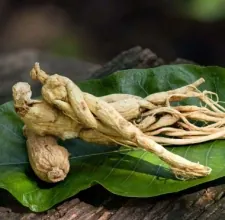
It means an extract made from the parts of the plant that grow above ground: the leaf and stem. The root, the part most people picture, is not named.
Panax ginseng is Asian ginseng. On the Glyco Harmony panel it is line 12 of the 22 ingredients in the proprietary blend. The full blend weighs 200 mg in each 1 mL dropper, and no single amount is printed.
The word "aerial" is easy to miss. It matters because the ginseng research most often quoted in blood sugar ads comes from the root. A label that names the leaf is telling you something different, even if the plant's name is the same.
Every line of the panel, in order, is on the label explained page.
02The research
What did the ginseng blood sugar trials actually test?
Mostly ginseng root, at doses far above a few milligrams. The best-known review pooled 16 randomized trials with 770 people (Shishtar et al., PLoS One 2014).
| Detail | Ginseng trials, pooled (Shishtar et al., PLoS One 2014) | Glyco Harmony label |
|---|---|---|
| Plant part | Mostly root | Aerial parts: leaf and stem |
| Daily amount | About 100 mg to 20 g | Not disclosed |
| Highest possible per 1 mL | Not applicable | About 17 mg, by label order |
| Fasting glucose | About 5.6 mg/dL lower on average | Not tested |
| A1C | No significant change | Not tested |
| Fasting insulin | No significant change | Not tested |
| Agreement between trials | High variation | No trial of the product |
NCCIH calls the research on Asian ginseng and blood sugar inconclusive and conflicting. A 2022 review of 20 studies did find better fasting glucose and some other heart and metabolic markers (NCCIH, Asian Ginseng). Even so, NCCIH finds no reliable evidence that any herbal supplement, ginseng included, helps control diabetes (NCCIH, Diabetes and Dietary Supplements).
03Leaf vs root
Does a ginseng leaf extract work like the root?
No one has shown that it does. None of the sources we cite tested a leaf extract for blood sugar. So the root results cannot simply be carried over to the leaf.
Leaf and root are different tissues. An extract of one is not a stand-in for the other, the same way an apple leaf is not an apple. Until a trial tests the leaf, its effect on glucose is unknown.
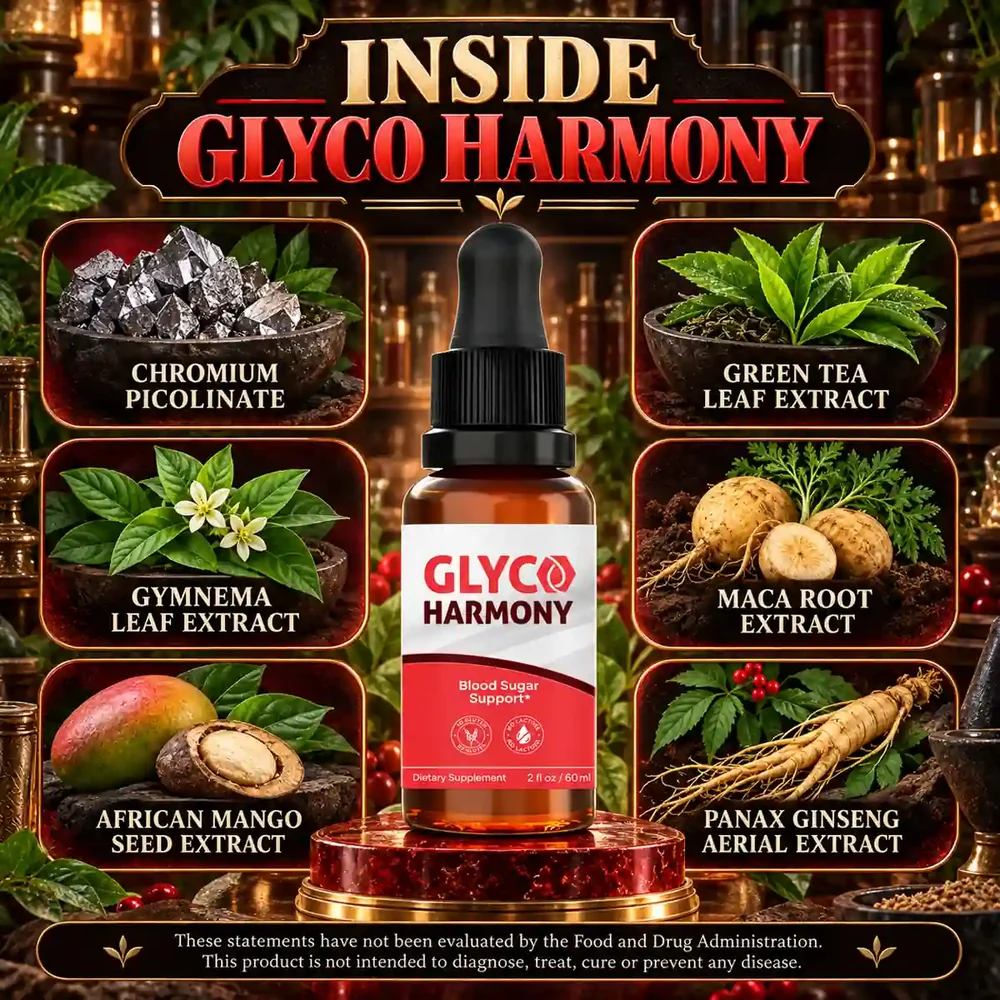
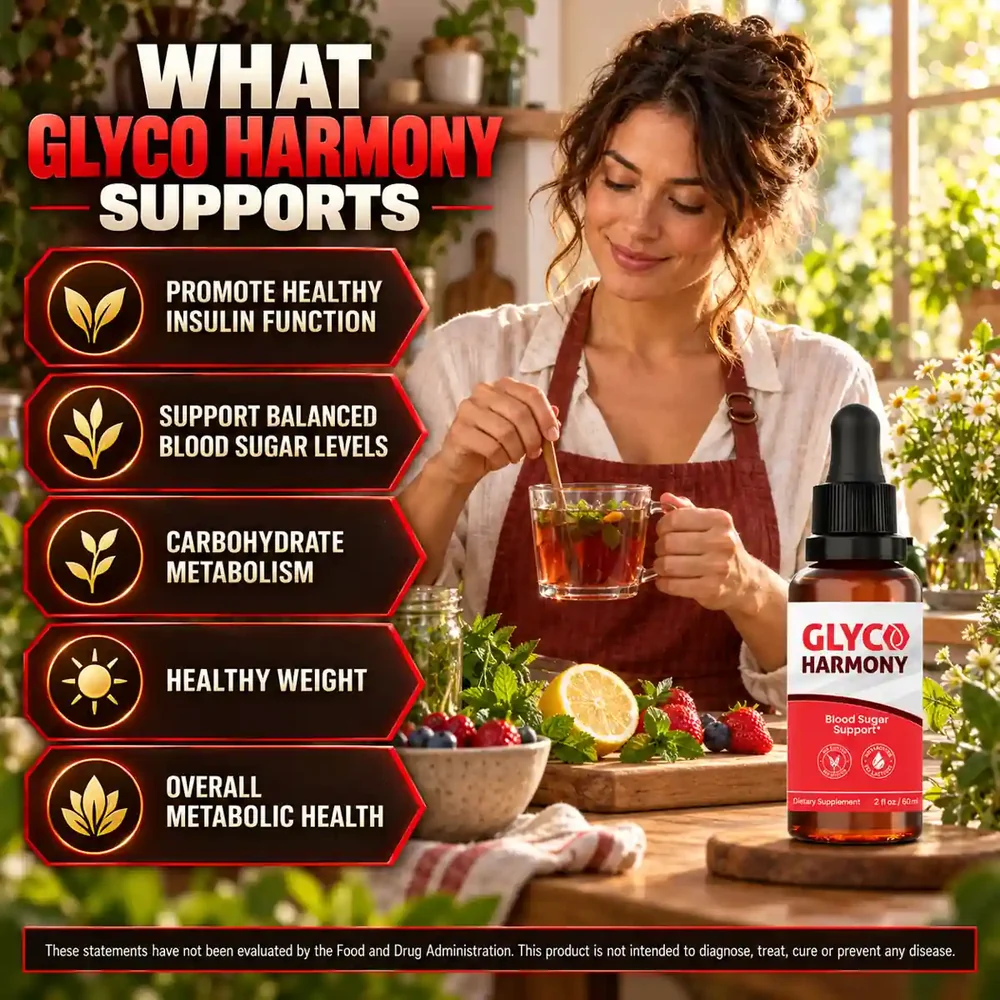
The brand's own poster shows the mix-up. Its ginseng tile is a forked root with red berries, yet the caption on that tile says "aerial extract". Buyers who skim the picture could easily assume root. We follow the label. Read how each ad claim holds up on the claims vs evidence page.
04The dose
How much ginseng is in a dropper of Glyco Harmony?
The label does not say, but its order sets a limit. Blend ingredients must be listed from heaviest to lightest (21 CFR 101.36 (eCFR)). Ginseng is twelfth, so the eleven lines above it each weigh at least as much. Twelve shares of at least equal size inside 200 mg leaves ginseng at about 17 mg per mL, at most.
That is the best case. The even-split average is about 9 mg per line. The lowest daily dose in the ginseng trials was about 100 mg (Shishtar et al., PLoS One 2014). Even at 2 droppers, the ceiling is about 33 mg, a third of that low end.
These figures are our math from label order, not a lab test. The real ginseng share could be much lower.
05Reading the numbers
How big is a 5.6 mg/dL change in fasting glucose?
Small. It is an average across trials that disagreed a lot, and it came from root doses many times larger than this blend could hold (Shishtar et al., PLoS One 2014).
Fasting glucose of 100 to 125 mg/dL falls in the prediabetes range. 126 or higher points to diabetes, once confirmed (NIDDK, Diabetes & Prediabetes Tests). A drop of about 5.6 mg/dL could move a number a little. It would rarely change which range a person is in.
A1C is the other key number. The pooled trials found no significant A1C effect (Shishtar et al., PLoS One 2014). For comparison, a lifestyle program aiming for 7% weight loss and 150 minutes of exercise a week cut the risk of type 2 diabetes by 58% (NIDDK, Diabetes Prevention Program).
Glyco Harmony: from $36 a bottle60 mL drops · 2, 4 or 8 bottles · free US shipping on 4 and 8 · 60-day money-back
See packs06The other ginseng
Is eleuthero the same as Panax ginseng?
No. Eleuthero is often sold as Siberian ginseng, but it is a different plant. Glyco Harmony lists it separately, as eleutherococcus senticosus root extract, line 5 of the blend.
So the bottle does contain a root called ginseng, just not Panax. Human studies of eleuthero are limited. Its blood sugar findings come only from animal studies (MSKCC, Siberian Ginseng (Eleuthero)). In small exercise studies, neither Panax ginseng nor eleuthero showed much benefit, and short-term use appeared safe (NIH ODS, Exercise & Athletic Performance).
Both plants have their own profile on the ginseng and eleuthero page.
07Safety
Who should be careful with ginseng?
People on diabetes medicines, people on blood thinners and anyone pregnant. Asian ginseng might lower blood sugar, may interfere with clotting and may interact with some medicines (NCCIH, Asian Ginseng). Insomnia is its most common side effect, and it may be unsafe in pregnancy (NCCIH, Asian Ginseng). Eleuthero can raise blood digoxin levels (MSKCC, Siberian Ginseng (Eleuthero)).
- Shakiness, sweating, hunger, dizziness, confusion or a fast heartbeat can mean low blood sugar, often below 70 mg/dL. Insulin and sulfonylureas raise that chance (NIDDK, Low Blood Glucose).
- Treat a low the way your care team taught you, often 15 to 20 g of fast carbohydrate, then recheck in 15 minutes (NIDDK, Low Blood Glucose).
- A seizure, fainting or confusion that will not clear is a 911 call.
Never stop or change insulin, metformin or any prescribed medicine because of a supplement. Tell your doctor or pharmacist before you add one. The medicine and supplements guide covers what to ask.
08Bottom line
So what does the ginseng line mean for buyers?
It means the ginseng in Glyco Harmony is not the ginseng most trials tested. The label names leaf and stem. The research is mostly root, at 100 mg or more a day.
Label order caps the ginseng at about 17 mg per dropper, and the real share could be far less. The best root data show a small fasting glucose drop and no A1C change.
That does not make the drops harmful. It does mean ginseng is not a strong reason to expect a change in your numbers. Track your readings, share them with your doctor, and judge the product on facts like these.
09FAQ
Ginseng leaf and root: questions
What is Panax ginseng aerial extract?
An extract made from the parts of Asian ginseng that grow above ground, the leaf and stem. It is not root extract. Glyco Harmony lists it as line 12 of its 22-ingredient blend, with no amount printed. The brand poster draws a root, but the label wins.
Is ginseng leaf as good as ginseng root for blood sugar?
No one knows. The blood sugar trials we cite mostly used root, and none of our sources tested a leaf extract for glucose (Shishtar et al., PLoS One 2014). Until a trial does, root results should not be read as leaf results, and leaf products should not borrow root claims.
How much ginseng do blood sugar studies use?
In a review of 16 randomized trials, daily doses ran from about 100 mg to 20 g, mostly root (Shishtar et al., PLoS One 2014). By label order, one dropper of Glyco Harmony holds at most about 17 mg of ginseng leaf and stem extract.
Does ginseng lower A1C?
Not in the pooled trials. A review of 16 trials found a modest fasting glucose drop of about 5.6 mg/dL, with no significant effect on A1C or fasting insulin (Shishtar et al., PLoS One 2014). NCCIH calls the overall evidence inconclusive and conflicting (NCCIH, Asian Ginseng). A1C is the number most doctors watch.
Is Siberian ginseng real ginseng?
Not in the Panax sense. Siberian ginseng, or eleuthero, is a different plant. Glyco Harmony lists eleuthero root separately from Panax ginseng. Its blood sugar findings come only from animal studies, and it can raise digoxin levels (MSKCC, Siberian Ginseng (Eleuthero)). Tell your pharmacist if you take digoxin.
Can ginseng make it hard to sleep?
It can. Insomnia is the most common side effect reported for Asian ginseng, the Panax species named on the label (NCCIH, Asian Ginseng). Glyco Harmony also lists guarana and green tea, which carry caffeine. If you notice poor sleep after starting it, mention it to your doctor or pharmacist.
10Who wrote this
Written and reviewed by
Pages built from the label, the official sales page and linked NIH, CDC, FDA, FTC and peer-reviewed sources.
Last updated . Read our editorial policy and how we check reviews. This website is run by a U.S. stocking partner, not by the manufacturer or the label's distributor. We earn money when you buy through our order links.
Keep reading
More about Glyco Harmony
U.S. stocking partner for Glyco Harmony
Ready to try Glyco Harmony?
Check your medicines first, then pick a pack. Bigger packs cost less per bottle, 4 and 8 bottles ship free in the US, and the guarantee runs 60 days from purchase.
- Official checkout (ClickBank)
- 60-day money-back
- Free US shipping on 4 and 8 bottles