Guide
A Prediabetes Plan Built on What Works
The best-tested prediabetes plan comes from the Diabetes Prevention Program: lose about 5 to 7% of your body weight and get at least 150 minutes of brisk activity a week. In the trial, that cut type 2 risk by 58%, and by 71% in people 60 and older. Glyco Harmony drops have no such trial and are not a shortcut.
Written by the Glyco Harmony research deskUpdated
01The starting point
What is prediabetes, and why is it worth acting on now?
Prediabetes means your blood sugar is higher than normal but not in the diabetes range. It is common, and it can often be turned around.
The NIDDK puts prediabetes at an A1C of 5.7 to 6.4%, or a fasting glucose of 100 to 125 mg/dL (NIDDK, Diabetes & Prediabetes Tests). About 115.2 million US adults are in that range (CDC, National Diabetes Statistics Report). Most feel nothing at all.
The good news is timing. Prediabetes is the stage where habit change has the strongest proof behind it. You do not need a perfect diet or a gym membership. You need a modest weight goal, regular movement and a way to keep going for months.
If you are not sure where your numbers fall, start with our guide to A1C and fasting glucose. A plan works best when it starts from a confirmed result.
02The evidence
What did the Diabetes Prevention Program actually find?
It compared lifestyle change, metformin and placebo in adults at high risk. Lifestyle change won clearly.
| Group | What they did | Drop in type 2 risk |
|---|---|---|
| Lifestyle change | Aimed for 7% weight loss and 150 minutes of exercise a week | 58% |
| Lifestyle change, age 60+ | The same program | 71% |
| Metformin | A prescription diabetes medicine | 31% |
| Any supplement | Not tested in the trial | No result |
The lifestyle group did better than the medicine group (NIDDK, Diabetes Prevention Program). The CDC now runs a National Diabetes Prevention Program based on the same idea, and reports the same 58% and 71% figures (CDC, Prediabetes).
03Weight goal
How much weight do you need to lose to lower your risk?
Less than most people think. The CDC target is about 5 to 7% of your body weight.
For a 200-pound person, 5 to 7% is 10 to 14 pounds (CDC, Prediabetes). You do not need to reach a 'perfect' weight. The trial's benefit came from a modest, steady loss that people could keep.
150 pounds
A goal of about 7.5 to 10.5 pounds.
180 pounds
A goal of about 9 to 12.5 pounds.
200 pounds
A goal of 10 to 14 pounds.
250 pounds
A goal of about 12.5 to 17.5 pounds.
Our own math: your weight times 0.05 and 0.07. Talk with your clinician before a weight plan if you have a heart, kidney or eating condition, or take medicine that affects blood sugar.
04Step by step
How do you start a prediabetes plan this week?
Six steps, in order. None of them needs special food or equipment.
Confirm your numbers
Ask your clinician for an A1C or fasting glucose test, and a repeat if the first result is in the prediabetes range.
Set a weight goal
Aim for 5 to 7% of your current weight. For someone who weighs 200 pounds, that is 10 to 14 pounds.
Build up to 150 minutes
Add brisk activity in short blocks, such as 30 minutes on five days, until you reach 150 minutes a week.
Change one meal at a time
Swap sugary drinks for water, add vegetables, and keep portions steady from day to day.
Join a program if you can
The National Diabetes Prevention Program offers a year-long lifestyle course with a coach and a group.
Retest and review
Recheck your numbers when your clinician suggests, and adjust the plan together.

Activity does not have to be a workout. Brisk walking counts, and so does cycling, dancing or swimming. Split it into chunks that fit your day. Ten minutes after each meal adds up to more than three hours a week.
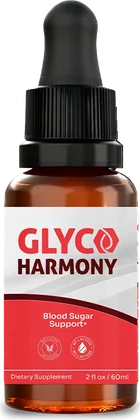
Glyco Harmony: from $36 a bottle60 mL drops · 2, 4 or 8 bottles · free US shipping on 4 and 8 · 60-day money-back
See packs05A sample day
What does a day on a prediabetes plan look like?
A steady breakfast, a walk, plant-heavy meals and a full night's sleep. The dial shows one way to arrange it.
- Breakfast, about 8:00
1 or 2 droppers, as the label says, next to any prescribed medicine at its usual time.
- Late-afternoon walk
The Diabetes Prevention Program aimed for 150 minutes of activity a week.
- Meals: more plants, steady portions
Losing 5-7% of body weight, with activity, cut type 2 risk by 58% in the DPP.
- Night, 7 to 9 hours
Regular sleep makes a steadier routine for meals, medicine and checks.

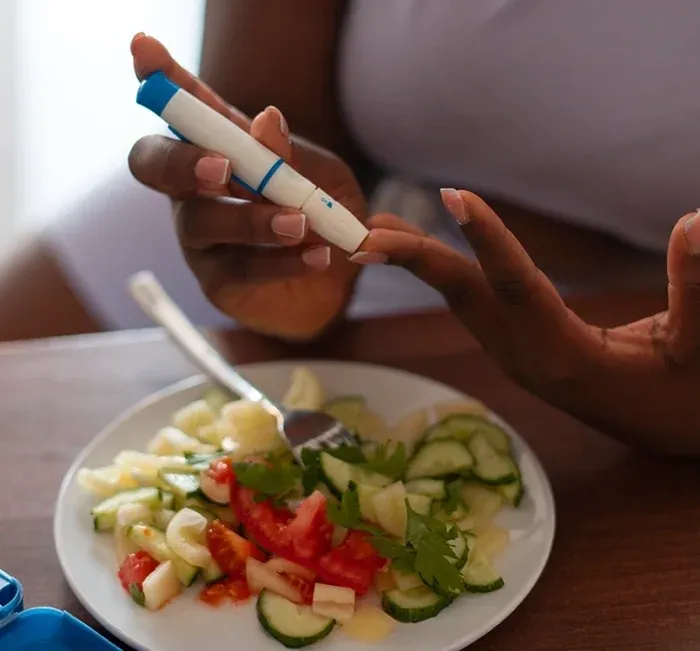


Lifestyle results from the NIDDK Diabetes Prevention Program (NIDDK, Diabetes Prevention Program) and the CDC (CDC, Prediabetes). The photos come from the brand's image set; they show models, not buyers. The time for the drops is a suggestion; the label names none.
Sleep and regular meals are not among the trial's two goals, but they make both easier to keep.
06Where drops fit
Where do Glyco Harmony drops fit in a prediabetes plan?
As an optional extra at most. The plan works without them, and they have no trial of their own.
Glyco Harmony is a dietary supplement in liquid drops, 1 or 2 droppers a day. Each 1 mL lists 0.7 mcg of chromium and a 200 mg blend of 22 plants and amino acids. Chromium did not seem to change glucose in healthy people, even at 200 to 1,000 mcg a day (NIH ODS, Chromium). The NCCIH finds no reliable evidence that any herbal supplement controls diabetes (NCCIH, Diabetes and Dietary Supplements).
What the drops offer
- A simple daily routine
- Every ingredient printed in weight order
- A 60-day money-back guarantee
What the plan offers instead
- A 58% drop in risk in a large trial
- No cost for walking or water
- Benefits for weight, heart and mood too
Keep taking prescribed medicine; never stop or change it because of a supplement. If your doctor has you on metformin, it stays part of the plan until your doctor says otherwise. Guarana and green tea in the blend add caffeine, with no amount printed (MSKCC, Guarana).
The ads for the drops go well past the label. We set each promise beside the studies on the claims vs evidence page.
07Staying on track
How do you know if your prediabetes plan is working?
Watch three things: your weight, your weekly minutes and your next lab result.
- Weeks 1-4
Track minutes and weigh yourself once a week at the same time. Expect slow change; a pound a week or less is fine.
- Months 2-3
Aim to reach 150 minutes a week most weeks. If weight has stalled, change one meal, not everything.
- Months 3-6
Ask your clinician about a repeat A1C or fasting glucose. Compare it with your starting number.
- Month 12
Review the whole year. The National Diabetes Prevention Program course runs about this long for a reason.
A slip is not a failure. Most people miss weeks. What counts is coming back to the plan. For the full picture of how the guides fit together, see the guides hub.
08FAQ
Prediabetes plan questions
Can prediabetes be reversed with diet and exercise?
Many people can bring their numbers back toward normal. In the Diabetes Prevention Program, aiming for 7% weight loss and 150 minutes of activity a week cut the risk of type 2 by 58%. Your clinician can retest you to see how your own numbers respond.
How much weight should I lose with prediabetes?
About 5 to 7% of your body weight, according to the CDC. For someone who weighs 200 pounds, that is 10 to 14 pounds. A modest, steady loss you can keep matters more than a big drop. Check with your clinician before starting if you have other health conditions.
How many minutes of exercise a week help prediabetes?
At least 150 minutes of brisk activity a week, the target used in the Diabetes Prevention Program and by the CDC. That can be 30 minutes on five days, or shorter walks after meals. Brisk walking counts; you do not need a gym.
Is metformin better than lifestyle change for prediabetes?
In the Diabetes Prevention Program, lifestyle change cut type 2 risk by 58% and metformin by 31%, both compared with placebo. Some people use both. Whether metformin suits you is a decision for your doctor, and you should never stop it on your own.
What is the National Diabetes Prevention Program?
A CDC-led lifestyle change program based on the original trial. It pairs people with prediabetes with a coach and a group to work on food, activity and weight over about a year. The CDC says it can lower type 2 risk by 58%, and by 71% for people over 60.
Should I take Glyco Harmony if I have prediabetes?
It is not needed for a prediabetes plan, and no trial has tested it. If you still want to try it, show the label to your doctor first, keep your food and activity goals, and keep any prescribed medicine exactly as directed. The proven parts of the plan come first.
How often should I check my A1C with prediabetes?
Your clinician sets the schedule, based on your numbers and risk. Many people retest after a few months of habit change. Ask at your visit when your next A1C or fasting glucose should be, and bring a log of your weight and weekly minutes.
09Who wrote this
Written and reviewed by
Pages built from the label, the official sales page and linked NIH, CDC, FDA, FTC and peer-reviewed sources.
Last updated . Read our editorial policy and how we check reviews. This website is run by a U.S. stocking partner, not by the manufacturer or the label's distributor. We earn money when you buy through our order links.
Keep reading
More about Glyco Harmony
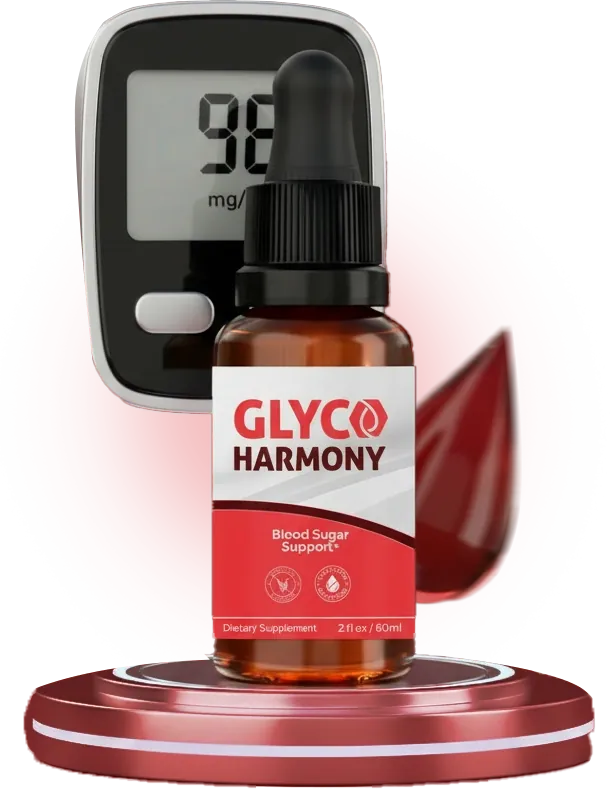

U.S. stocking partner for Glyco Harmony
Ready to try Glyco Harmony?
Check your medicines first, then pick a pack. Bigger packs cost less per bottle, 4 and 8 bottles ship free in the US, and the guarantee runs 60 days from purchase.
- Official checkout (ClickBank)
- 60-day money-back
- Free US shipping on 4 and 8 bottles