Claims vs evidence
Glyco Harmony Claims, Checked Against the Evidence
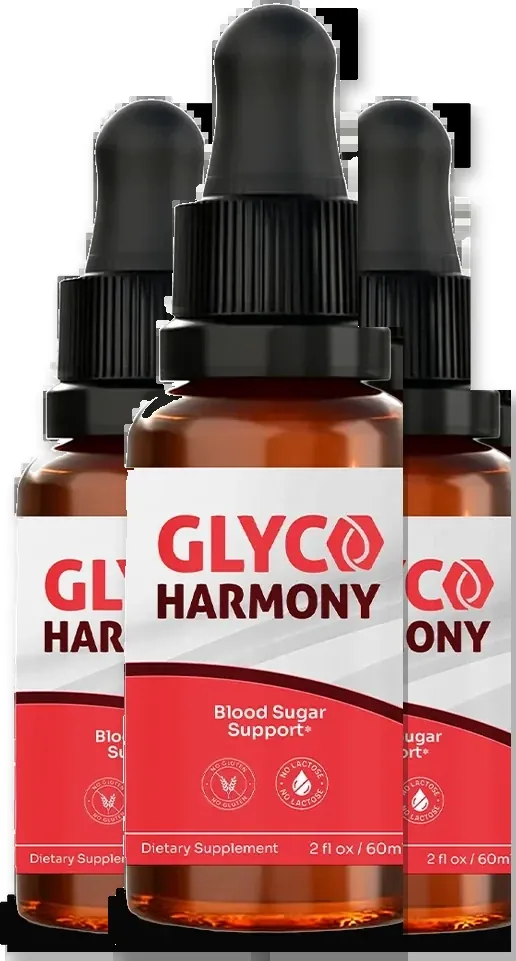
The Glyco Harmony label makes one modest claim, "Blood Sugar Support*". The sales page adds five support claims, and its ads go much further. No trial has tested the drops. Some ingredients show small effects in studies, but at doses far above what one dropper holds. No herbal supplement has reliable evidence for controlling diabetes.
Written by the Glyco Harmony research deskUpdated
01Three layers
Where do the Glyco Harmony claims come from?
From three places, and each one says more than the last. The bottle is careful, the sales page is upbeat, and the ads cross a line.
| Where | What it says | Kind of claim |
|---|---|---|
| Bottle front | "Blood Sugar Support*" | Structure/function, with the FDA statement |
| Sales page panels | Five support claims, from insulin function to metabolic health | Structure/function |
| Ad headline and copy | A type 2 headline, a "mechanisms" line and testimonials | Reads as a disease claim |
The first two layers use wording that supplements are allowed to print. The third reads as a promise to manage a disease, which is a drug claim (FDA, Illegally Sold Diabetes Treatments). That is our reading of the rules, not an FDA finding about Glyco Harmony.
02Five claims
How do the five support claims hold up?
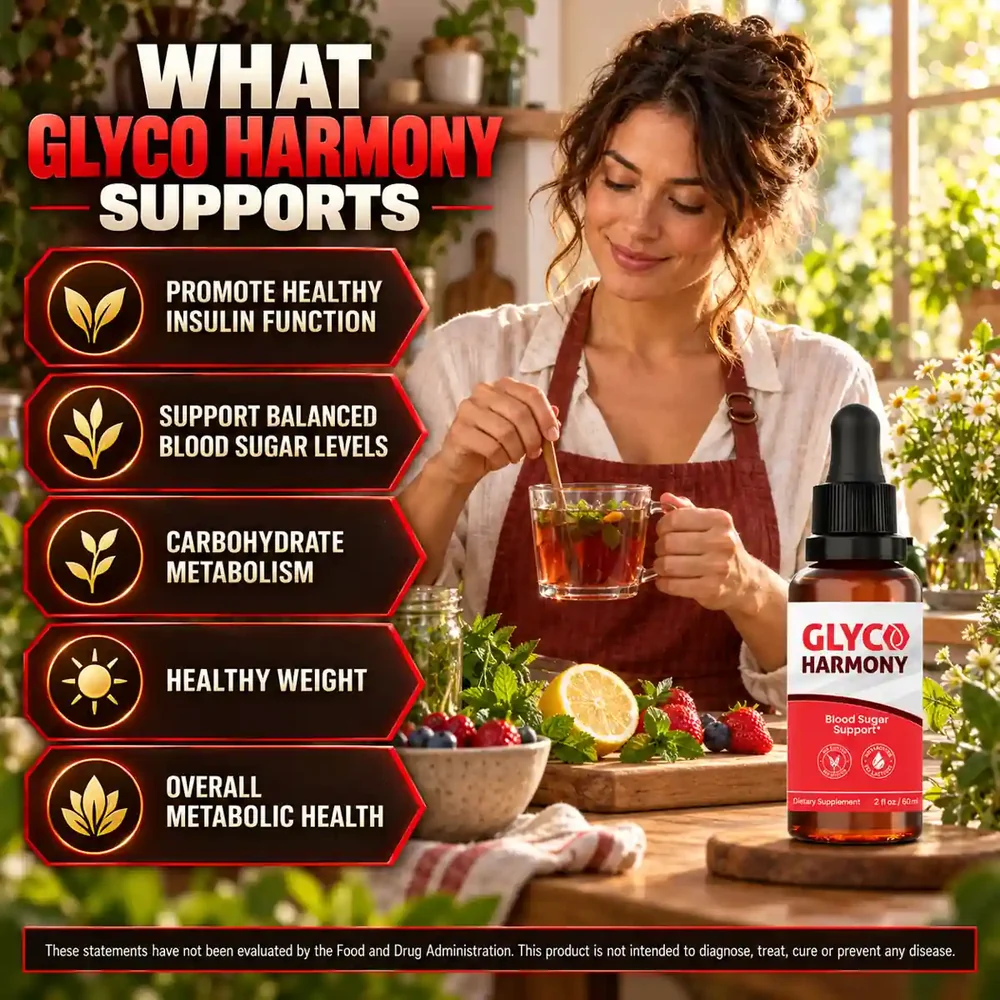
Each panel quotes the sales page, then gives the closest evidence we could find.
 Sales page claim 1
Brand says“Promote Healthy Insulin Function”
What the evidence saysChromium does help insulin work, but studies used 200-1,000 mcg a day. One dropper gives 0.7 mcg, and results even at full doses are slight and mixed. (NIH ODS, Chromium)
 Sales page claim 2
Brand says“Support Balanced Blood Sugar Levels”
What the evidence saysGymnema shows a small fasting-glucose drop at 200-400 mg; ginseng a modest one with no A1C change. NCCIH finds no reliable evidence that herbal supplements control diabetes. (Drugs.com, Gymnema monograph) (Shishtar et al., PLoS One 2014) (NCCIH, Diabetes and Dietary Supplements)
 Sales page claim 3
Brand says“Aid in Managing Carbohydrate Metabolism”
What the evidence saysNo trial has tested these drops. The ADA's Standards of Care find no supplement proven to lower blood glucose without a deficiency. (ADA, Vitamins & Supplements)
 Sales page claim 4
Brand says“Assist in Maintaining a Healthy Weight”
What the evidence saysAfrican mango evidence is weak, forskolin showed no weight effect, raspberry ketone was never tested alone and capsaicin did not change weight in 12 weeks. (MSKCC, Irvingia gabonensis (African mango)) (NIH ODS, Dietary Supplements for Weight Loss)
 Sales page claim 5
Brand says“Contribute to Overall Metabolic Health”
What the evidence saysToo broad to test. What has been tested: in the DPP, lifestyle change cut type 2 risk by 58%, and metformin by 31%. (NIDDK, Diabetes Prevention Program)
The five coral icons are the sales page's own artwork for each claim (Glyco Harmony sales page).
The gap in one sentence
Every claim leans on an ingredient that has been studied alone, at a much bigger dose, and none on a test of the drops.
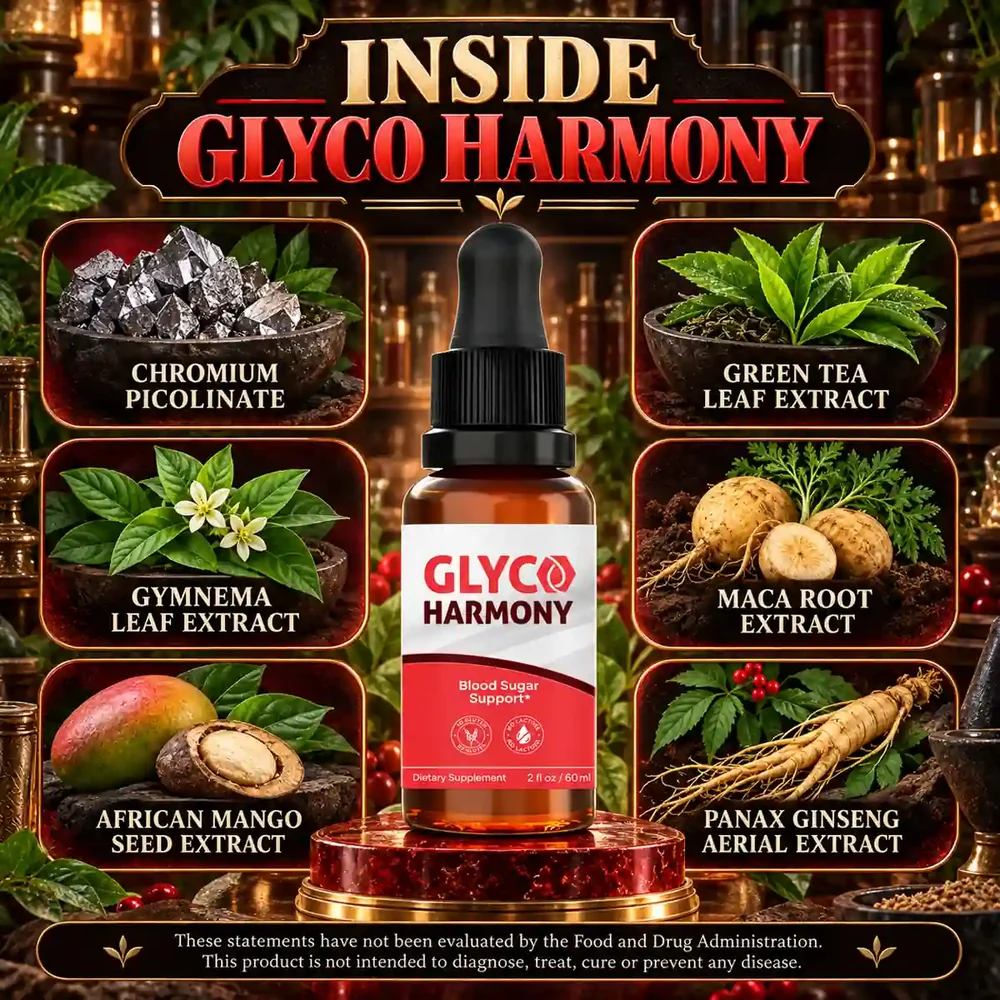
Chromium is the clearest case. Studies used 200-1,000 mcg a day (NIH ODS, Chromium). One dropper gives 0.7 mcg. The blend's 22 lines share 200 mg, about 9 mg each, while gymnema, African mango and ginseng studies used hundreds of milligrams or more (Drugs.com, Gymnema monograph) (NIH ODS, Dietary Supplements for Weight Loss) (Shishtar et al., PLoS One 2014).
03The ads
What about the bolder lines in the ads?
Six lines from the sales page and the bottle, each with the evidence beside it.
- Sales page headline'The Easiest Way to Manage Type 2'No supplement treats diabetes. NCCIH finds no reliable evidence that herbal supplements control it, and the ADA finds no supplement proven to lower glucose. (NCCIH, Diabetes and Dietary Supplements) (ADA, Vitamins & Supplements)
- Sales page copy'works directly on the mechanisms that throw your blood sugar out of balance'No study of these drops exists, so no mechanism has been shown. Health claims need human trials of the same product and dose. (FTC, Health Products Compliance Guidance)
- TestimonialsBuyers who say they could skip 'expensive diabetes medications'A testimonial is not evidence. Supplements can add to diabetes medicines and cause lows; never stop a prescription on an ad's word. (NIDDK, Low Blood Glucose) (ADA, Vitamins & Supplements)
- Sales page FAQ'Just take 2 capsules'Glyco Harmony is a liquid. The label says 1 or 2 droppers full daily, placed in the mouth and swallowed. (Glyco Harmony sales page)
- Sales page headline'5 vital nutrients'The list under it names 6, and the label has 23 ingredient lines. Only chromium has a printed amount. (Glyco Harmony sales page)
- Bottle front'Blood Sugar Support*' with the FDA asteriskStructure/function wording, allowed with the FDA statement. It is not a claim to treat diabetes. (FDA, Using Dietary Supplements)
Claims as printed on the sales page (Glyco Harmony sales page) and the bottle. FDA has warned sellers of supplements that make diabetes treatment claims (FDA, Illegally Sold Diabetes Treatments).
04The headline
Why does the type 2 headline matter so much?
Because it invites people with diabetes to see the drops as treatment. The headline reads "The Easiest Way to Manage Type 2". Another line says the formula "works directly on the mechanisms that throw your blood sugar out of balance". No study of Glyco Harmony backs either one.
Health agencies are direct about this. The NCCIH says no reliable evidence shows that any herbal supplement helps control diabetes, and warns against replacing medical care with an unproven product (NCCIH, Diabetes and Dietary Supplements). The ADA finds no supplement proven to lower blood glucose without a deficiency (ADA, Vitamins & Supplements).
The testimonials add risk. Some describe avoiding "expensive diabetes medications". A testimonial is one person's story, not a test, and it can lead a reader to skip a drug they need.
Keep taking prescribed medicine; never stop or change it because of a supplement. If you take insulin or a sulfonylurea, adding herbs may raise the chance of a low (NIDDK, Low Blood Glucose). Know the signs on the safety page.
Glyco Harmony: from $36 a bottle60 mL drops · 2, 4 or 8 bottles · free US shipping on 4 and 8 · 60-day money-back
See packs05Real proof
What would real proof for Glyco Harmony look like?
A human trial of this exact product. The FTC says health claims generally need randomized human trials on the same product, dose and kind of people being advertised to (FTC, Health Products Compliance Guidance).
Same product
The drops as sold, not single ingredients tested on their own.
Same dose
1 or 2 droppers a day, the amounts on the label.
A fair control
A placebo group, with neither side knowing who got what.
Real outcomes
A1C and fasting glucose over months, plus side effects.
Testimonials, lab studies and animal studies do not meet that bar, and a disclaimer does not fix a misleading claim (FTC, Health Products Compliance Guidance). None of these four steps has been published for Glyco Harmony.
06A fair view
What can be said fairly in Glyco Harmony's favor?
Some honest points stand. The label is complete, and the risks are mostly about how the product is sold.
Pros
- All 23 ingredient lines printed in weight order
- Front label stays within support wording
- Simple routine of 1 or 2 droppers
- 60-day money-back window
Cons
- No trial of the drops
- Chromium under 1% of studied amounts
- Blend amounts hidden
- Ads with a type 2 headline and testimonials
07Your call
How should you weigh the claims before you buy?
Trust the label over the ads. The label carries the real amounts and the FDA statement.
- Read "support" as a mild word, not a result.
- Treat any type 2 promise as a red flag.
- Ask what dose a study used, then compare it with the dropper.
- Ignore testimonials and logos when judging results.
- Let your own readings, checked with your doctor, be the test.
Our post on red flags in blood sugar ads covers the photos, ebooks and journal logos. For each ingredient's research, see all 23 ingredient lines.
08FAQ
Questions about Glyco Harmony claims
Does Glyco Harmony treat type 2 diabetes?
No. It is a dietary supplement, and its label says it is not intended to diagnose, treat or prevent any disease. The ADA finds no supplement proven to lower blood glucose without a deficiency (ADA, Vitamins & Supplements). Treatment for type 2 belongs with your care team.
Why does the Glyco Harmony label say 'support' and not 'treat'?
Because supplements may make support claims, not treatment claims. 'Blood Sugar Support*' describes normal body function and comes with the FDA statement. A claim to treat a disease would make the product a drug, and the FDA does not approve supplements before sale (FDA, Using Dietary Supplements).
Does Glyco Harmony boost metabolism?
No study shows that it does. The metabolic health claim is too broad to test. The herbs sold for metabolism showed little: capsaicin did not change weight in 12 weeks, forskolin had no weight effect and raspberry ketone was never tested alone (NIH ODS, Dietary Supplements for Weight Loss).
Does Glyco Harmony improve insulin sensitivity?
No study shows that it does. Chromium helps insulin work, but trials used 200-1,000 mcg a day and found only slight effects in people with diabetes (NIH ODS, Chromium). One dropper of Glyco Harmony gives 0.7 mcg, far below that range.
Can I stop my diabetes medicine if Glyco Harmony seems to work?
No. Keep every prescribed dose, and talk to your doctor about any change in your readings. Supplements can add to diabetes medicines and cause lows (ADA, Vitamins & Supplements). The NCCIH warns against replacing medical care with an unproven product (NCCIH, Diabetes and Dietary Supplements).
Has Glyco Harmony been tested in a clinical trial?
No published trial has tested Glyco Harmony itself. The evidence the ads lean on comes from single ingredients studied alone, mostly at far higher doses. The FTC says health claims generally need human trials of the same product, dose and population (FTC, Health Products Compliance Guidance).
09Who wrote this
Written and reviewed by
Pages built from the label, the official sales page and linked NIH, CDC, FDA, FTC and peer-reviewed sources.
Last updated . Read our editorial policy and how we check reviews. This website is run by a U.S. stocking partner, not by the manufacturer or the label's distributor. We earn money when you buy through our order links.
Keep reading
More about Glyco Harmony

U.S. stocking partner for Glyco Harmony
Ready to try Glyco Harmony?
Check your medicines first, then pick a pack. Bigger packs cost less per bottle, 4 and 8 bottles ship free in the US, and the guarantee runs 60 days from purchase.
- Official checkout (ClickBank)
- 60-day money-back
- Free US shipping on 4 and 8 bottles